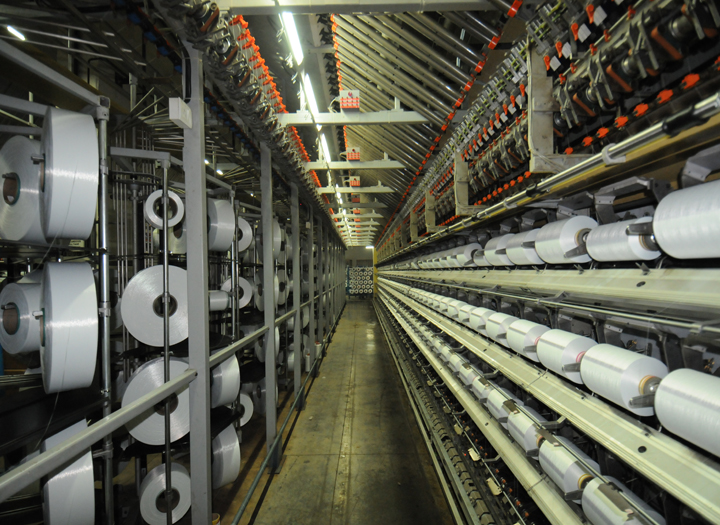
Polyester yarn supplier Polygenta has acquired a license from its owners perPETual Global Technologies Ltd for new postconsumer plastic PET bottle recycling technology, which it says breaks new ground. The parent business, which owns the patents to the new process, says it also intends to seek partners to expand internationally in 2016. Polygenta is already said to be converting more than 1.5 million postconsumer PET bottles into high quality DTY and POY yarn every single day at its plant in Nashik, a city in the northwest region of Maharashtra towards the west coast of India.
But now, the newly licensed process is said to allow the company to turn contaminated plastic bottles into polyester yarn with ‘incredible consistency, high operational efficiency and substantially lower conversion costs’ than conventional processes.
Dr Vivek Tandon, chairman of perPETual Global Technologies told Ecotextile News that the process underpinning the new perPETual branded filament yarn leads to “an extremely controllable process which allows high quality sustainable filaments yarns to be produced with less pollution (and improved resource efficiency) such as and 86 per cent savings in water compared to conventional polyester yarn manufacturing processes.” Energy is also saved – it is claimed that the process uses 75 per cent less energy than conventional PET manufacturing. Tandon also said recycled polyester yarns made from the process have passed stringent safety tests and meet Oeko Tex Class I, so that its recycled PET yarns can also be used for textiles and textile toys for babies and small children under the age of three. “… over 20 tonnes of product are being bought by regular customers on a daily basis.”
In recycled polyester manufacturing, plastic bottles are most commonly converted into unwashed flakes, which are then used to produce rPET chips, which is finally spun into polyester yarn.
However, in the case of perPETual, it is claimed the new process allows the company to convert the unwashed flakes into very high quality ester in the first instance, bypassing the need for rPET chips. The quality of the intermediate ester in terms of cleanliness and being free from contaminants is, clearly, critical in terms of the final yarn and an ongoing challenge in the recycled PET sector.
Tandon added that the work at Nashik represents a “significant breakthrough,” not just due to the sustainability benefits being achieved in its ester production but also the actual quality of the ester – which he says is equal in purity to virgin material derived from petro-chemicals.
Ester is a key building block in the production of PET flakes.
“We have developed a method of taking used plastic bottles, which in many cases are coloured and/or dirty and breaking that plastic down into a high grade ester, cost efficiently and withoutthe use of any hazardous chemicals,” he said. “Our method converts superficially clean PET flakes back into their building blocks – virgin grade esters. The plant hasbeen awarded class one Oeko Tex certification as well as the Global Recycling Standard by Control Union.”
“This has led to the production ofone of the most sustainable filament yarns in the 50 – 300 denier range andis applicable for a range of textile products. At last there is a technology which can be used to convert PET plasticwaste into high grade quality PET products profitably. Our dream is to make PET recycling so easy and profitable that it becomes too expensive to discard PET plastic,” concluded Dr Tandon