Podcast: Chemicals, climate change and greenwashing

Share
Share

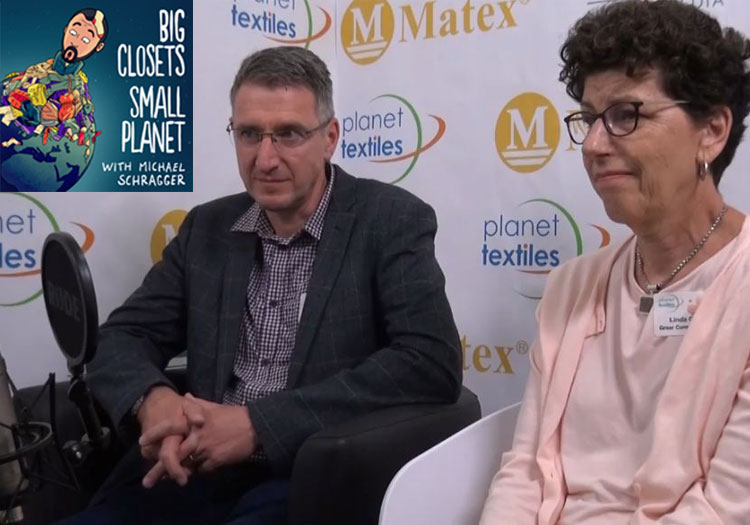
BARCELONA – “More of the same is not going to get us to where we need to go,” said the ever-outspoken global fellow for the Institute for Public and Environmental Affairs Linda Greer at the recent Planet Textiles in Barcelona where she sat down alongside long-time Ecotextile News contributor Phil Patterson to discuss the direction of textile chemical management in global supply chains.

The pair spoke with the Sustainable Fashion Academy’s Mike Schragger in the Planet Textiles Pod, for the debut episode of the second series of the Big Closets, Small Planets podcast series, in a wide-ranging discussion that touches on the ZDHC initiative, what retailers can do more effectively, climate change, water pollution and Greenpeace’s sudden pause on its textile activities.

You can listen to the podcast here.

This joint interview from two leading independent experts in the field gives listeners a unique, deep insight into what direction the industry could, and should be taking when it comes to the management of potentially hazardous substances in the context of wider environmental issues.

 On the subject of the industry’s contribution to climate change, Patterson, also the managing director of Colour Connections, told Schragger: “as consumers, we’ve probably never been safer, as citizens, we’ve probably never been so unsafe. But people don’t see that yet; they see a few more storms, a few more dry periods.”

Greer added: “in the big picture, we’re complicit in this problem. But I think people don’t really realise that there’s such a huge environmental footprint in the clothing that they buy. It’s not really very well understood and those consumers that are concerned often worry about the wrong thing.”

But Patterson also shared his optimism that “a few brands are starting to look very seriously at water consumption. And when you’ve got areas of the world where water is free to the factory, why would they save it? So you’ve got some brands that are beginning to build it into their ways of working.

“What I’m also optimistic about is that recently I’ve seen zero liquid discharge, a system in which they remediate the effluent and recycle all the water – reducing net water consumption by about 90 per cent.

“When I first looked at this maybe 10 – 15 years ago it was very expensive and very energy intensive. But the technology’s moved on to make it affordable with a lower energy footprint, and I think we’re at a stage where we could start to see this becoming the norm,” he noted.


Newsletter

Read our top news stories delivered straight to your inbox.

Share

Recommended

Latest Magazine

Features
Why China’s new wastewater standard is only one part of a broader shift spanning environmental law
As Brussels switches on its product passport registry, fashion’s supply chain data gaps threaten a bumpy rollout
As green claims face closer regulatory scrutiny liability no longer sits solely with the brands
News
Preview of our Textile Standards & Legislation Guide
China’s strengthened rules make officials personally accountable for serious environmental damage
New process to strip reactive dyes from cotton could benefit textile-to-textile recycling
Opinion
European factory closures show costs, geography and demand decide which materials survive

Other publications from MCL News & Media

Scroll to Top
Logo

Our free newsletter showcases the very best of our journalism, delivered to you twice a week

Advertising
With Us

Help to support the purpose-led work of our team of journalists, international correspondents, and partners – and expose your product or service to our global readership.

Subscribe to our magazine today and receive exclusive online content

Subscribe