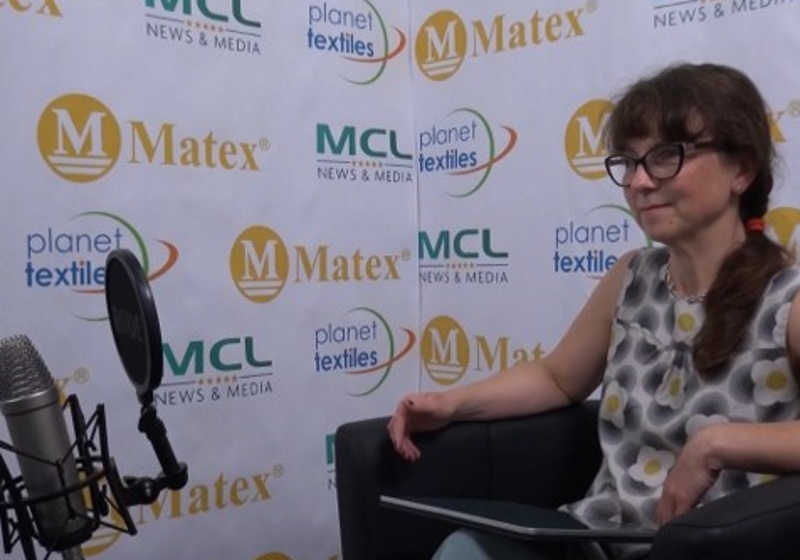
Though Mather and her team have worked to comprehend the scale of the textile microfibre pollution for some time now, she says the attention of industry – and more so the general public – hasn’t been captured until more recently.
“The interest from the industry at the time wasn’t there,” she says. “There was a lot of fear and denial about what was actually happening. So, I got involved to dig deeper and really try and find the answers for myself,” Mather says.
For the broader public, “it wasn’t really until Blue Planet 2 [a BBC documentary narrated by David Attenborough] came out that people started to talk more and more about it. There was then more openness to understand that it could be something invisible such as a tiny microfibre that can’t be seen by the human that can be just as harmful as say, a plastic bag or a bottle.”
Part of the problem, Mather believes, stems from confusion about how to define microfibres.
“In the textile industry, we use the term microfibres to define a synthetic fibre that is less than one denier and has a diameter of less than 10 micrometres – that’s a very specific textile technology term,” she notes.
“There’s (now) a lot of confusion [about this term], and I think at the moment we’re at that stage where it’s almost a little too late to re-define a title of something that we’re still trying to understand.”
Mather outlines three different types of pollutant: microplastics, microfibres and micro-fragments. Efforts in the textile industry, at present, aim to understand the environmental impact of textile microfibre shedding from synthetic fabrics, but she asks what problems could fragments from these other sources pose?
“With micro-fragments, we’re getting so tiny. When we talk about how we’re actually stopping this from getting into the environment – some of the capture methods of using filters – those filters are going to have to get smaller and smaller and the complexities that comes with that are more and more difficult.”
Kick back and take time out of your day to update yourself on the latest thinking behind one of the textile industry’s biggest brains on this very complex issue.
Listen to the full podcast here.