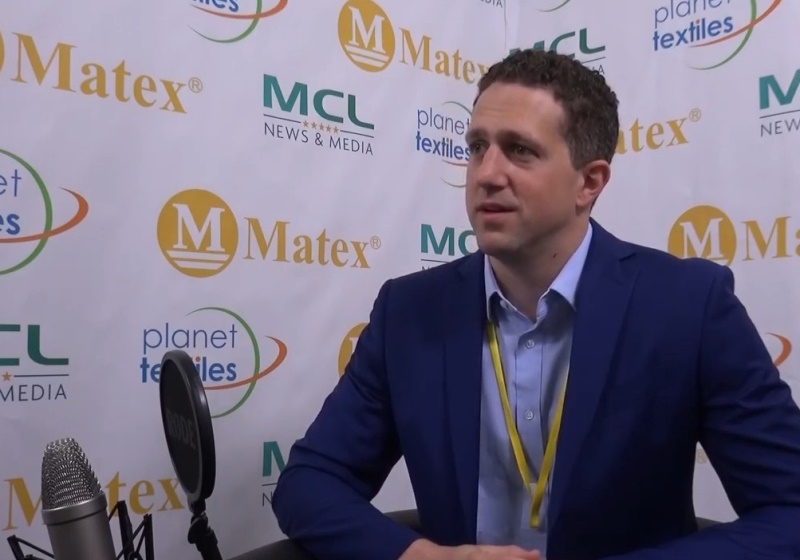
BARCELONA – As part of this year’s Planet Textiles sustainability summit Spencer Null, director of product development at Natural Fiber Welding, sat down with the Sustainable Fashion Academy’s Michael Schragger to discuss how his company upcycles lower quality staple cotton into premium filaments that behave like synthetics.
Natural Fiber Welding, like a raft of like-minded firms incubated by the Fashion for Good Accelerator programme, says it is on the verge of mainstream commercial uptake, but needs brand demand to get the ball rolling.
“Today we have a pilot facility in Illinois, in the United States, and we’re working with brands to develop the products and prove the concept… it starts with the brands, they know what their customers want,” he said in the Planet Textiles Pod.
Natural Fiber Welding leverages a recycling solution which not only enables the reclamation of used fibre, but promises greater functionality from the resultant material.
“If you think about the company name – Natural Fiber Welding – well most people think of bonding metals together using heat. Well we’re bonding fibres together. Welding is something that happens without glue, so we are disrupting the bond on the outside of each individual fibre within that yarn and allowing them to bond to the fibre next to them, essentially lengthening each individual fibre,” Null says.
“So that takes fibre quality and recycled short staple fibre out of the question because you’re essentially turning it into a premium fibre or giving it properties not even possible with premium cotton fibres today,” he continues.
According to the material engineer, with these additional functionalities, cotton fibre more closely resembles the characteristics expected of a synthetic as opposed to conventional cotton fibre.
Null says: “For cotton, these performance characteristics are everything from improved pilling, so you don’t have these loose fibres around the surface of your fabric; improved moisture management, so dry time is 40 per cent faster and vertical wicking 10x better; and many other benefits.
“What we do is reformat natural materials. That allows us to replace plastics on a global scale,” he adds.
You can hear the full podcast here. Take just 10 minutes out of your day to learn of what could soon become a key alternative for brands looking to implement circularity in supply chains.