‘Unsafe’ levels of carcinogen found in masks

Share
Share

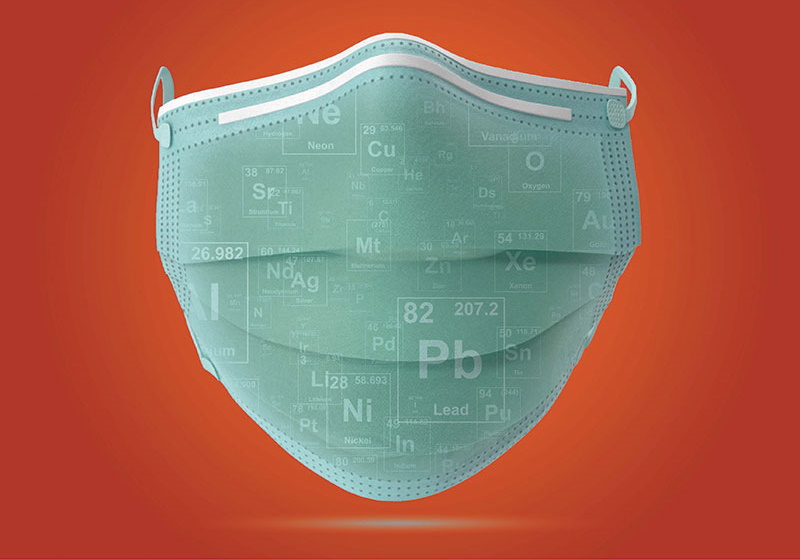
BRUSSELS – Titanium dioxide particles have been found in the fibres of face masks used to control the COVID-19 pandemic at levels posing a risk to human health, according to a new study by the Belgian national public health institute, Sciensano.

Researchers found titanium dioxide levels on the surface of some face masks at more than 1,000 times the level of their estimated “safe threshold”, according to the paper.

Entitled ‘Titanium dioxide particles frequently present in face masks intended for general use require regulatory control’, the report was funded by the Belgian government and published in the peer-reviewed journal, Scientific Reports.

In a global exclusive, Ecotextile News last year revealed that German scientists had found that wearing certain types of face masks for long periods of time could result in potentially hazardous chemicals and harmful microplastics being inhaled deep into human lungs.

BRUSSELS – Titanium dioxide particles have been found in the fibres of face masks used to control the COVID-19 pandemic at levels posing a risk to human health, according to a new study by the Belgian national public health institute, Sciensano.

Researchers found titanium dioxide levels on the surface of some face masks at more than 1,000 times the level of their estimated “safe threshold”, according to the paper.

Entitled ‘Titanium dioxide particles frequently present in face masks intended for general use require regulatory control’, the report was funded by the Belgian government and published in the peer-reviewed journal, Scientific Reports.

In a global exclusive, Ecotextile News last year revealed that German scientists had found that wearing certain types of face masks for long periods of time could result in potentially hazardous chemicals and harmful microplastics being inhaled deep into human lungs.

Share

Recommended

Latest Magazine

Features
Why the EU’s regulatory push for longer-lasting clothes could enrich the wrong industry.
Textile dye recovery is technically real, but experts warn that it risks becoming a costly sideshow.
When profits wobble, fashion brands default on climate, pushing self-issued net-zero targets over the horizon.
News
A new evidence-based review challenges assumptions over organic cotton’s growth.
EU anti-fraud investigators help block the illegal export and dumping of thousands of tonnes of textiles.
SBTi’s new net-zero standard tightens rules on fashion’s climate claims
Opinion
Exclusive: Uzbek cotton cluster boss hails big reforms as human rights campaigners claim exploitation

Other publications from MCL News & Media

Scroll to Top
Logo

Our free newsletter showcases the very best of our journalism, delivered to you twice a week

Advertising
With Us

Help to support the purpose-led work of our team of journalists, international correspondents, and partners – and expose your product or service to our global readership.

Subscribe to our magazine today and receive exclusive online content

Subscribe