Textile Exchange launches updated PFMM tool

Share
Share

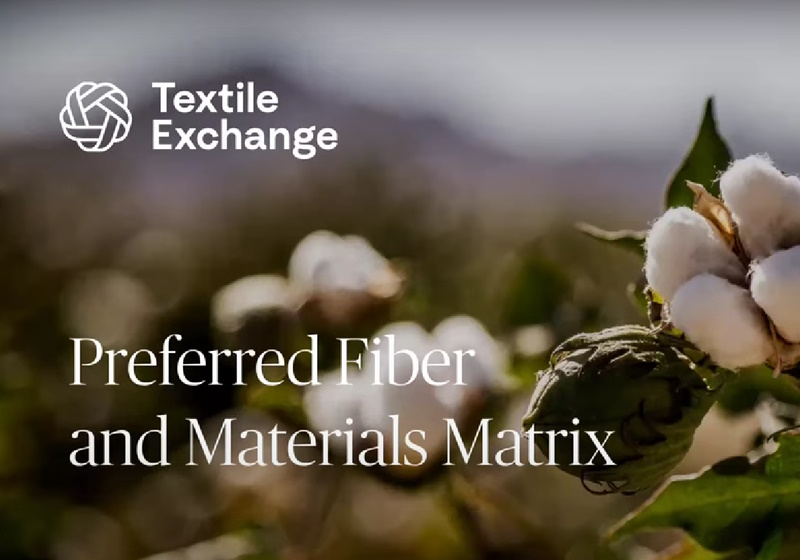
LUBBOCK – Textile Exchange has launched a new version of its Preferred Fiber and Materials Matrix (PFMM) tool which aims to assess the performance of different sustainability standards within various material categories.

The new version of the PFMM, which is open-source for the first time, is part of Textile Exchange’s attempt to improve the data on which the industry relies to measure its sustainability progress.

“I think the PFMM has really helped bring to life our LCA+ approach,” Beth Jensen, Textile Exchange’s climate+ impact director, told Ecotextile News. “Our climate plus strategy says we need to look at climate as well as other impact areas, like biodiversity and water and soil health. And so the intent of the PFMM is to bring that to life.”

LUBBOCK – Textile Exchange has launched a new version of its Preferred Fiber and Materials Matrix (PFMM) tool which aims to assess the performance of different sustainability standards within various material categories.

The new version of the PFMM, which is open-source for the first time, is part of Textile Exchange’s attempt to improve the data on which the industry relies to measure its sustainability progress.

“I think the PFMM has really helped bring to life our LCA+ approach,” Beth Jensen, Textile Exchange’s climate+ impact director, told Ecotextile News. “Our climate plus strategy says we need to look at climate as well as other impact areas, like biodiversity and water and soil health. And so the intent of the PFMM is to bring that to life.”

Share

Recommended

Latest Magazine

Features
Why the EU’s regulatory push for longer-lasting clothes could enrich the wrong industry.
Textile dye recovery is technically real, but experts warn that it risks becoming a costly sideshow.
When profits wobble, fashion brands default on climate, pushing self-issued net-zero targets over the horizon.
News
A new evidence-based review challenges assumptions over organic cotton’s growth.
EU anti-fraud investigators help block the illegal export and dumping of thousands of tonnes of textiles.
SBTi’s new net-zero standard tightens rules on fashion’s climate claims
Opinion
Exclusive: Uzbek cotton cluster boss hails big reforms as human rights campaigners claim exploitation

Other publications from MCL News & Media

Scroll to Top
Logo

Our free newsletter showcases the very best of our journalism, delivered to you twice a week

Advertising
With Us

Help to support the purpose-led work of our team of journalists, international correspondents, and partners – and expose your product or service to our global readership.

Subscribe to our magazine today and receive exclusive online content

Subscribe