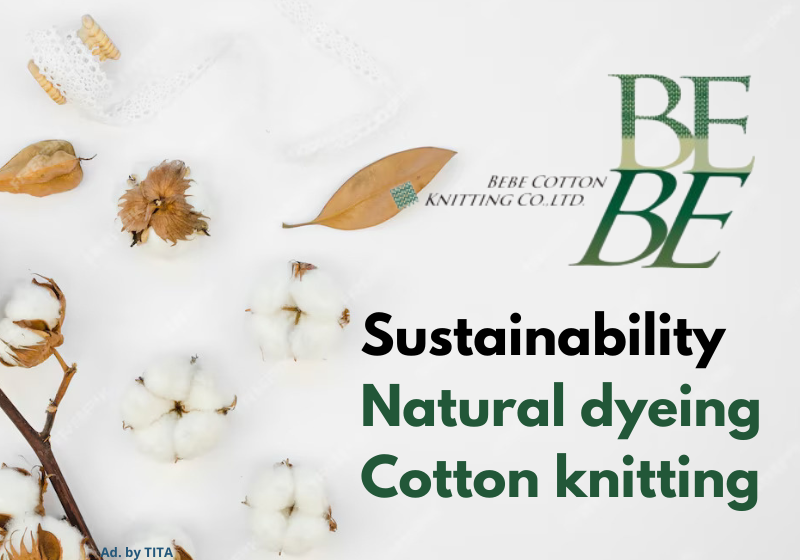
SPONSORED CONTENT – Most designers follow the aesthetic fashion in the textile industry. However, rapid industrial development results in the ignorance of protection of environment for this green plant. Ethical fashion represents a solution to the design, sourcing and manufacture of textiles which benefits human beings and local communities and reduce the pollution on the environment. Be Be Cotton pursue the spirits by applying organic, natural & recycled raw-materials, emphasizing the protection of know-how, helping local communities and following the fair-trade agreement simultaneously.
Ethical fashion represents a solution to the design, sourcing and manufacture of textiles which benefits human beings and local communities and reduce the pollution on the environment. Be Be Cotton pursue the spirits by applying organic, natural & recycled raw-materials, emphasizing the protection of know-how, helping local communities and following the fair-trade agreement simultaneously.
Be Be Cotton is the only manufacturer in Taiwan that focuses on cotton ecological dyeing and has built a new dyeing factory for this purpose. Be Be Cotton is aware of the importance of protecting the environment and ecology, and is therefore committed to using dyes from natural dyes, including using plants, insects and minerals as raw materials to reduce environmental pollution caused by dyes during the production process. The mill does not only facilitate the production of the natural dyeing fabrics, it also incorporates the AVITERA™ SE dyestuffs from Huntsman.
With AVITERA SE dyes, the dyeing and the washing-off process is required to operate at a maximum temperature of 60°C rather than the 90°C in typical dyeing process. Dye adsorption is very high and with only five percent or less unfixed dye needing to be removed, instead of the usual 15 to 30 percent, the number of rinsing baths to obtain the required fastness properties is greatly reduced. The combined result is a significantly reduced water and energy consumption and CO2 emissions for the dyeing processes.
Be Be Cotton’s new dyeing mill is located in the largest settlement for fabrics dyeing and fixation industry in Taiwan. The heating and power for the dyeing machine are supplied by steam and electricity from a co-gen power plant in the industrial park to achieve a maximum integration of energy. In addition, the stenter machine was fuelled by natural gas which produces less CO2 compared with those using normal fuel oil. The mill is also granted GOTS certification. Please visit Be Be Cotton for more cotton natural dyeing information.
Ad. by TITA