Fashion & Textiles New Zealand has called for an industry-designed textile product stewardship model to strengthen reuse and recovery infrastructure while protecting small businesses from disproportionate costs.
Its 2026 policy priorities urge government to establish a process and timeline with industry to explore a scheme, rather than propose a final model.
Fashion & Textiles New Zealand has called for an industry-designed textile product stewardship model to strengthen reuse and recovery infrastructure while protecting small businesses from disproportionate costs.
Its 2026 policy priorities urge government to establish a process and timeline with industry to explore a scheme, rather than propose a final model.
The trade body wants credible data to underpin its design, with potential scheme revenue supporting shared collection, sorting, recovery and reprocessing capacity.
It also calls for stronger repair and reuse services, circular design and business models that keep textiles in use.
The organisation urges scrutiny of whether consumer, advertising and online market rules address high-volume, low-value textile businesses and ensure fair competition.
The proposals form part of five priorities covering sector coordination, manufacturing and skills, business growth, fibre development and circularity.
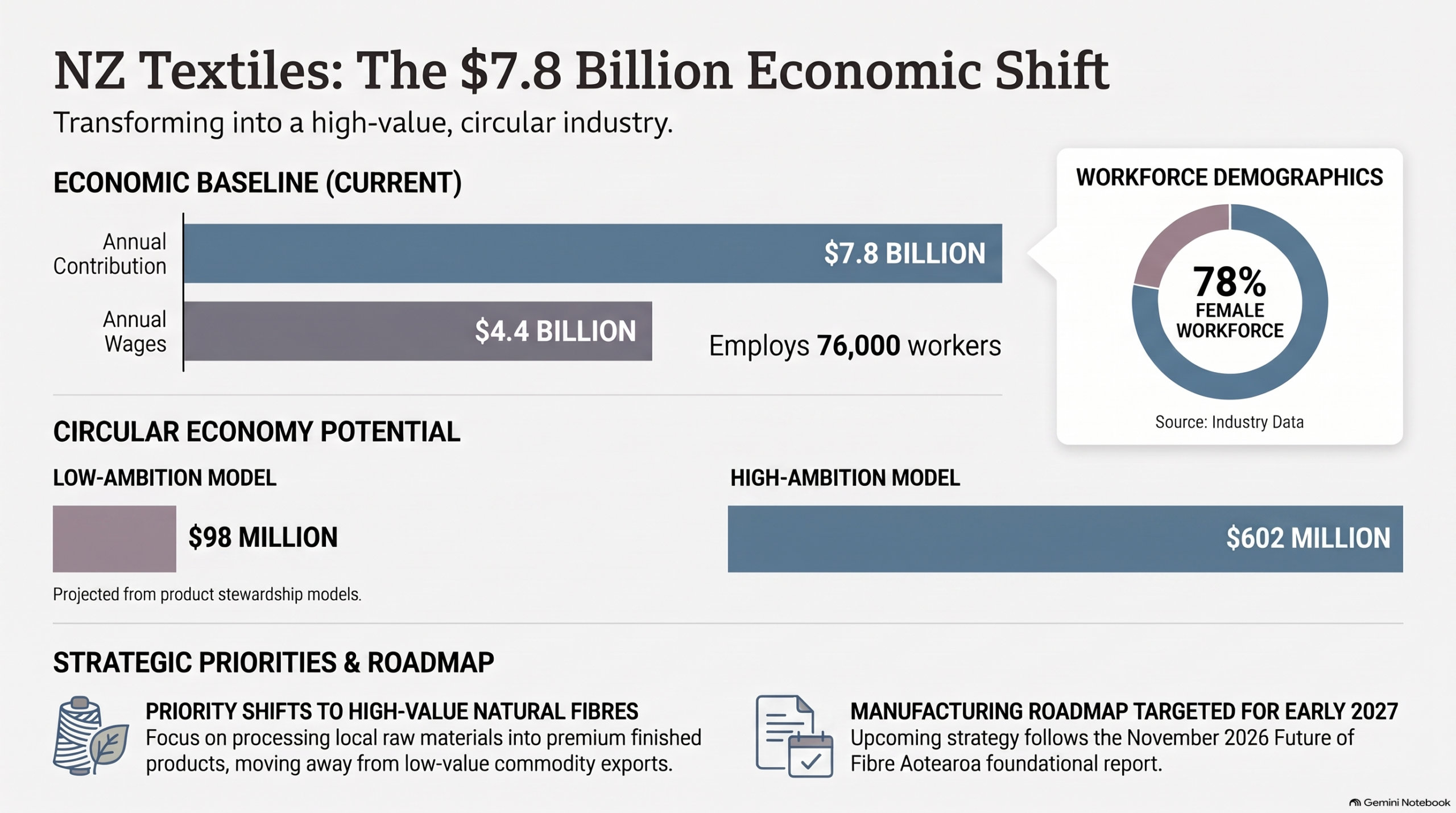
A fibre report is due in November, followed by a manufacturing strategy in early 2027 to guide industry investment.