Puma cut purchasing volumes as inventories fell 24.3% year on year to €1,608.9 million ($1,790.7m), while weaker demand and distribution changes weighed on third-quarter sales.
The sportswear company’s results linked the inventory reduction mainly to lower purchasing, rather than increased sales. It reported no associated environmental savings.
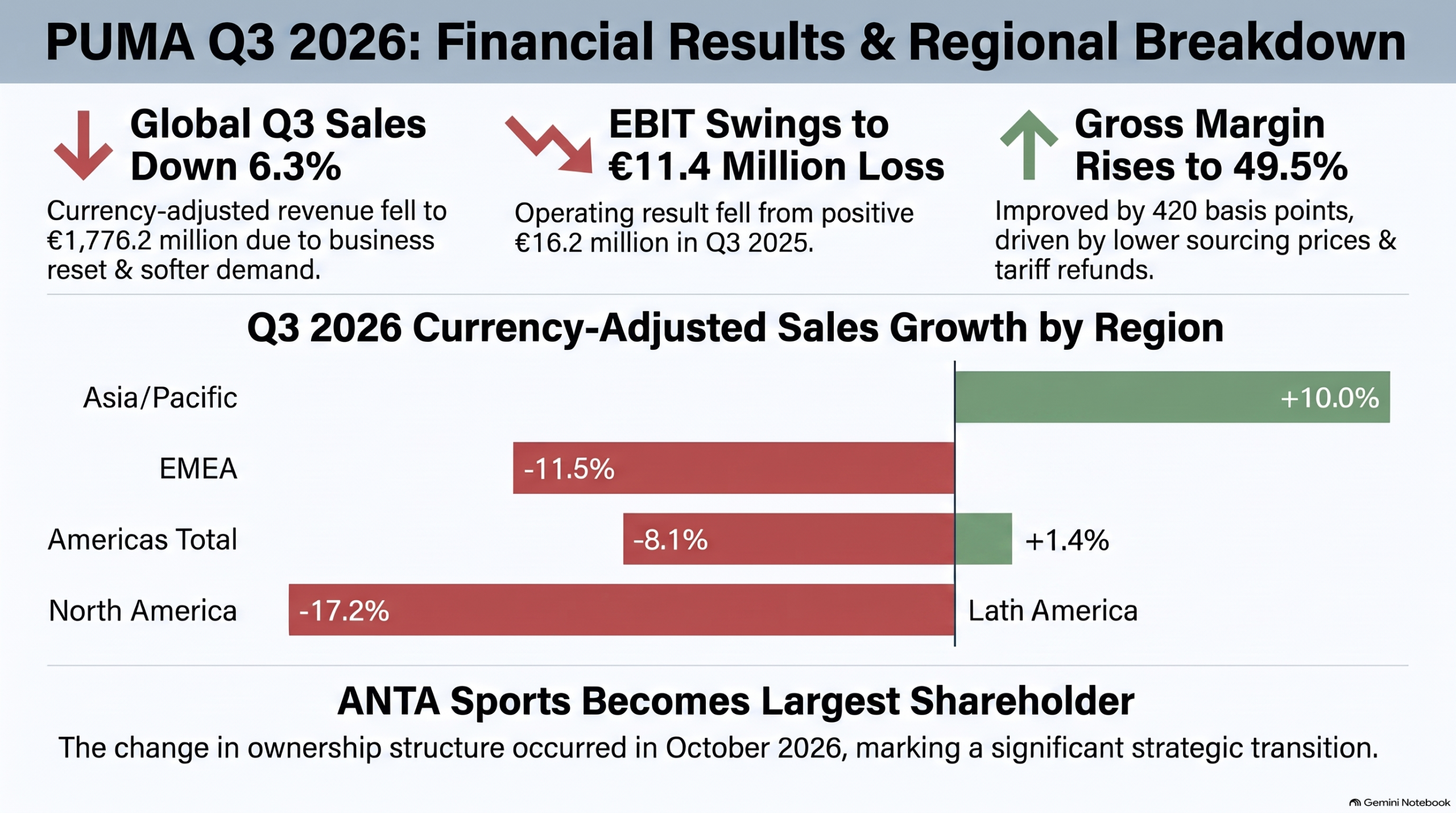
Puma cut purchasing volumes as inventories fell 24.3% year on year to €1,608.9 million ($1,790.7m), while weaker demand and distribution changes weighed on third-quarter sales.
The sportswear company’s results linked the inventory reduction mainly to lower purchasing, rather than increased sales. It reported no associated environmental savings.
Apparel sales declined 9.4% on a currency-adjusted basis, reflecting softer demand for core ranges and children’s products. Group sales fell 6.3% on the same basis.
Lower sourcing prices, tariff refunds and reduced freight expenses helped lift gross margin to 49.5%, although higher operating expenses contributed to an operating loss.
Arthur Hoeld, chief executive officer of Puma, said: “Our third-quarter performance was in line with expectations”.
The company narrowed its forecast annual operating loss to €80 million–€130 million ($89m–$144.7m).
It also reduced planned capital expenditure to below €150 million ($167m), partly reflecting the classification of certain IT investments as operating expenses.