CHT helps Jack & Jones lower its denim impact

Share
Share

TÜBINGEN – Denim brand Jack & Jones has partnered with the German-based textile auxiliaries specialist CHT Group to replace the use of enzymes, pumice stones, chlorine bleach and potentially hazardous potassium permanganate for producing new jeans with the much sought after distressed look.

The new ‘Low Impact Denim’ collection from Jack & Jones brand, which is owned by Bestseller of Denmark, will use CHT’s ‘organIQ’ patented bleaching system that can be applied to denim as a fine spray mist to give significant reductions in water consumption.

Jack & Jones is set to launch its Low Impact Denim Collection in stores and online at this coming August.

The move comes as the CHT Group also ramps up its involvement with the ZDHC (zero discharge of hazardous chemicals). The company says it’s already uploaded more than 750 of its textile chemical formulation in the ZDHC Gateway with 78 per cent of these rated at the highest level 3 for conformance to the ZDHC MRSL (manufacturing substance list).

TÜBINGEN – Denim brand Jack & Jones has partnered with the German-based textile auxiliaries specialist CHT Group to replace the use of enzymes, pumice stones, chlorine bleach and potentially hazardous potassium permanganate for producing new jeans with the much sought after distressed look.

The new ‘Low Impact Denim’ collection from Jack & Jones brand, which is owned by Bestseller of Denmark, will use CHT’s ‘organIQ’ patented bleaching system that can be applied to denim as a fine spray mist to give significant reductions in water consumption.

Jack & Jones is set to launch its Low Impact Denim Collection in stores and online at this coming August.

The move comes as the CHT Group also ramps up its involvement with the ZDHC (zero discharge of hazardous chemicals). The company says it’s already uploaded more than 750 of its textile chemical formulation in the ZDHC Gateway with 78 per cent of these rated at the highest level 3 for conformance to the ZDHC MRSL (manufacturing substance list).

Share

Recommended

Latest Magazine

Features
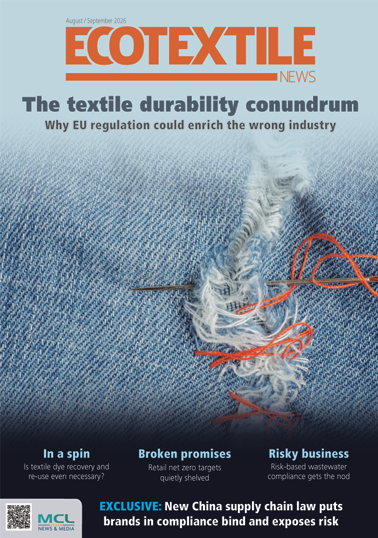
Why the EU’s regulatory push for longer-lasting clothes could enrich the wrong industry.
Textile dye recovery is technically real, but experts warn that it risks becoming a costly sideshow.
When profits wobble, fashion brands default on climate, pushing self-issued net-zero targets over the horizon.
News
A new evidence-based review challenges assumptions over organic cotton’s growth.
EU anti-fraud investigators help block the illegal export and dumping of thousands of tonnes of textiles.
SBTi’s new net-zero standard tightens rules on fashion’s climate claims
Opinion
Exclusive: Uzbek cotton cluster boss hails big reforms as human rights campaigners claim exploitation

Other publications from MCL News & Media

Scroll to Top
Logo

Our free newsletter showcases the very best of our journalism, delivered to you twice a week

Advertising
With Us

Help to support the purpose-led work of our team of journalists, international correspondents, and partners – and expose your product or service to our global readership.

Subscribe to our magazine today and receive exclusive online content

Subscribe