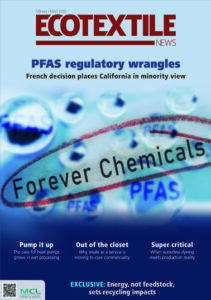
In this webinar, Germany, the Netherlands, Norway, Sweden and Denmark describe their work on a REACH restriction proposal to limit the risks to the environment and human health from the manufacture and use of all per- and polyfluoroalkyl substances (PFAS).
 This was the initial call for evidence on the potential hazards around the use of PFAS, a chemical that is commonly found in textiles an applied as a dirt, stain and water repellent in outdoor fabrics and technical fabrics. PFAS, a group of more than 4,700 chemicals, are known to be highly persistent in the environment and have been frequently observed to contaminate groundwater, surface water and soil. If releases continue, they will keep accumulating in the environment, drinking water and food. Certain PFAS are also known to accumulate in humans causing serious health effects such as cancer and liver damage.
This is the initial call for evidence that was held during the summer of 2020.
Presentations to support this webinar
Presentations (All slides in one) 
Questions and answers
Original broadcast date: 29th October 2020