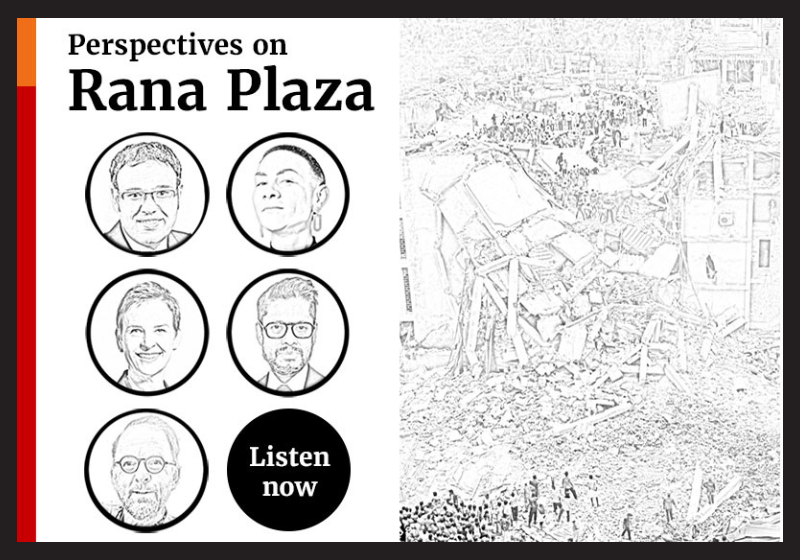
WAKEFIELD — A decade on from one of the fashion industry’s darkest days, a panel of industry experts come together as part of a special podcast examining the long-term impacts of the Rana Plaza catastrophe and assessing what progress has been made in the intervening years.
This commemorative episode of Ecotextile Talks unites voices from the fashion industry with the fields of politics, academia and advocacy to share diverse perspectives on the tragedy.
Our podcast also trails a 12-page supplement in the printed April edition of Ecotextile News, which we will release free to the industry, on Monday 24th April – coinciding with the 10th anniversary of the Rana Plaza disaster.
Marking this significant and sombre milestone, podcast host David Styles and guests explore the culture in which the catastrophe occurred, its lasting legacies for victims and the global apparel sector, as well as looking ahead to what the next decade may hold.
[sc_embed_player_template1 fileurl=https://traffic.libsyn.com/ecotextiletalks/FInal_Rana_Plaza_Podcast.mp3]
This episode and any others in the series can be listened to via all major podcast platforms. Subscribe to our podcasts and radio shows by following us on Apple, Google, Spotify and Amazon Music.
Frank and often emotive testimonies help contextualise a tragic event which drew the world’s attention in 2013, with Professor Rashedur Chowdhury, an academic who has conducted more than 400 interviews with those impacted by the disaster, providing unique insights into the experiences of those who worked at Rana Plaza.
Highlighting the prevalence of practices which placed undue pressure on workers, Chowdhury shares a theme evident throughout his Rana Plaza research of impractically high production targets being set which nobody he spoke to had ever been able to meet.
“They simply knew they were never good enough. Forget about the physical injustice, it’s so morally wrong to tell someone ‘you didn’t work hard’ when they just gave their lives for these factories and brands,” he told Ecotextile Talks.
The comments of Miran Ali, factory owner and vice-president of the Bangladesh Garment Manufacturers and Exporters Association, also give an invaluable insider’s view on the work which has since been undertaken — both by the Bangladeshi authorities and those working in the nation’s garment sector — to ensure workers are protected.
He says the significance of the factory collapse means to this day he thinks of his career in terms of “pre-Rana Plaza and post-Rana Plaza”.
Further contributions making up the 40-minute podcast include the perspectives of Mary Creagh, chair of the Ethical Trading Initiative, and Lavinia Muth, activist and consultant.