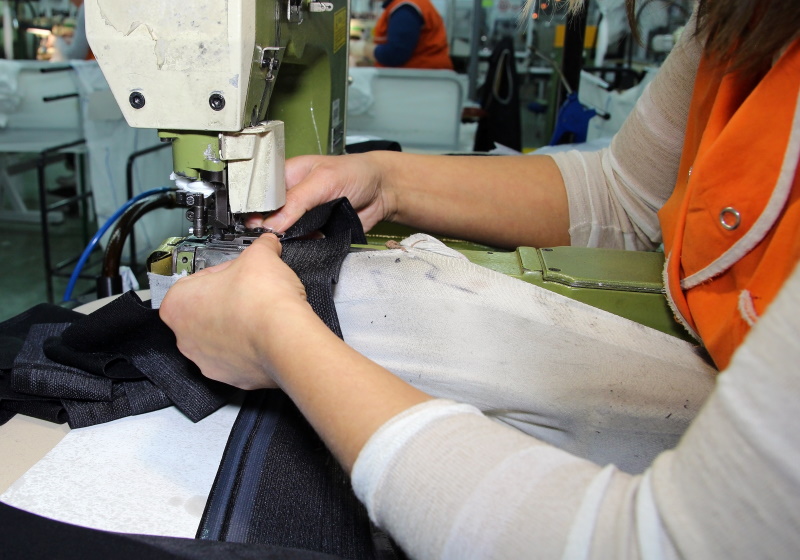
Davis opened the discussion by asking about the impact of COVID-19 and the associated lockdowns on the global fashion industry and, in particular, the effect on how brands manage worker rights and relationships in their supply chains.
Describing the situation as “complex”, Sumner said: “I think it may be too early for us to be able to predict and say what are going to be the repercussions of this, and how long those repercussions are going to remain within the industry.
“I suspect that we are going to see some major changes, and I’m hoping some of those major changes are going to be really positive in terms of things like improving transparency and improving the relationship and the connection between brands and suppliers.
“But we are in a situation where no one has been in before, this is the first time we’ve all faced a pandemic, obviously, and everyone is responding and reacting in different ways.
“And I think the long term repercussions of COVID, and the way that the industry works, is going to be something that we’re reporting on and looking at and feeing through for the next four, five, six years to really understand what those impacts are.”
Dowling agreed noting that some brands had cancelled orders without compensation but others had agreed to pay for all orders – leaving them with “huge amounts of stock” as lockdowns continue.
“At the minute, we’re not seeing that there is a fall in payments towards garment workers, but there is a fall further down in the tiers. And it’s interesting to see how is that impact then going to maybe carry on up through the supply chain.
“I read recently that the price of cotton has actually dropped to as low as it was in the financial crisis. So, that is another issue that is probably yet to be felt and that will most likely translate through the supply chain and probably won’t come into effect in maybe a year or so’s time.”
To listen to the full podcast CLICK HERE.