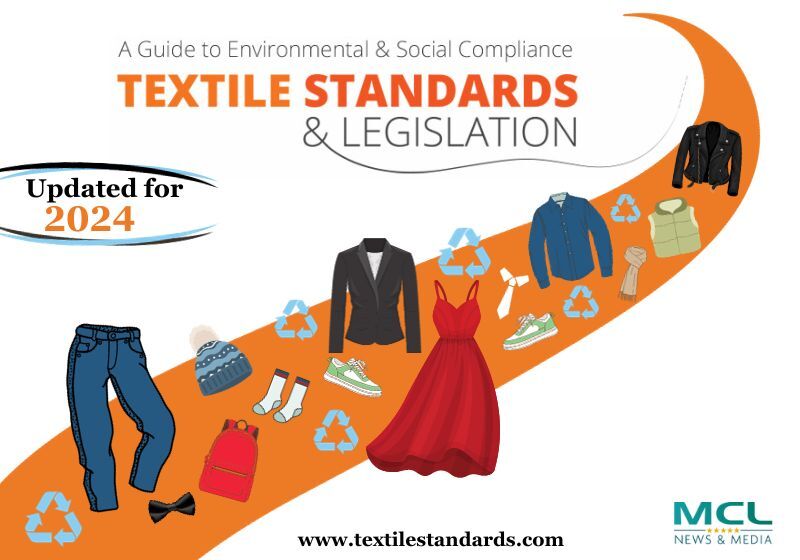
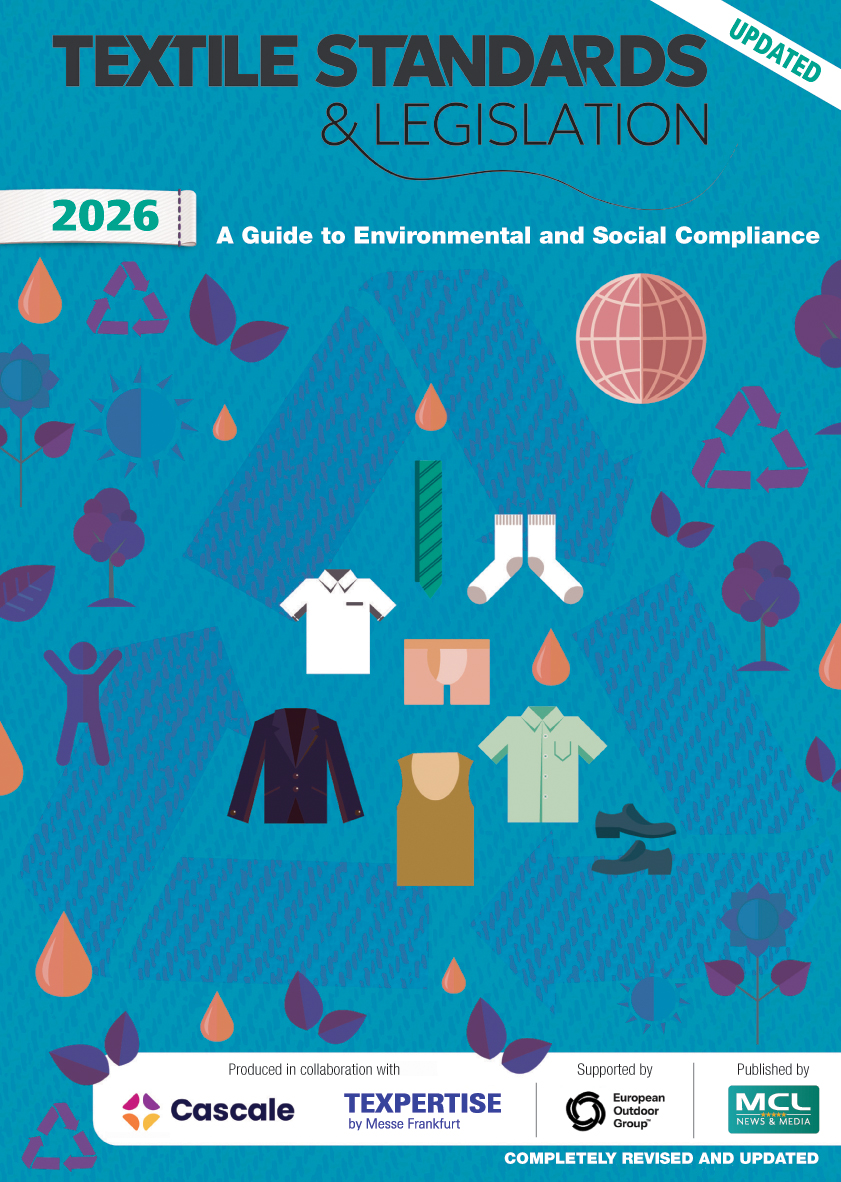
WAKEFIELD – With the ever-increasing array of incoming new legislation designed to reduce the environmental and social impacts of the fashion and textiles industry, it’s been a busy time updating our online guide to Textile Standards & Legislation.
This continually updated guide will help industry stakeholders understand how best to comply with new and proposed laws and regulations from the EU Corporate Sustainability Due Diligence Directive – finally agreed last month – to the New York Fashion Act.
The online resource is based on our 100-page Textile Standards & Legislation printed booklet – now in its eighth edition – which gives readers a snapshot of the most important voluntary and obligatory environmental and social standards, tools and labels in the textile industry.
We aim to update this resource in real-time at www.textilestandards.com and provides even more detailed information than we can include in print, as well as useful links to all the key supporting documentation.
We’ve recently updated a host of sections enabling subscribers to unravel the differences between the EU’s Corporate Sustainability Due Diligence Directive (CSDDD), which will make companies liable for human rights and environmental violations in their global supply chains, and the Corporate Sustainability Reporting Directive (CSRD) which requires companies to publish reports on their social and environmental risks.
The guide also explains the complex relationships between European legislation and strategy documents, including the European Green Deal, Circular Economy Action Plan (CEAP), Strategy for Sustainable and Circular Textiles, Green Claims Directive, Waste Directive Framework, Ecodesign for Sustainable Products Regulation and Digital Product Passport.
Across the Atlantic, it considers the implications of new and proposed laws including the New York Fashion Act, the FABRIC Act, California’s Responsible Textile Recovery Act (now delayed) and the Uyghur Forced Labour Prevention Act (UFLPA).
With more impending legislation across a wide variety of countries and regions, aimed at addressing issues from climate change to modern slavery, and from textile circularity to PFAS substances, we hope that this guide will be a great starting point and an increasingly important resource.
You can see some sample content here: Product Environmental Footprint, and access all our content on the Textile Standards website HERE. A printed version will be available later this year as legislation and standards are developed further throughout 2024.