SPONSORED CONTENT – The LYCRA Company is hosting a series of global panel discussions with apparel industry experts on critical sustainability issues facing the sector. Today, we examine the industry’s waste problem and reveal recent survey results.
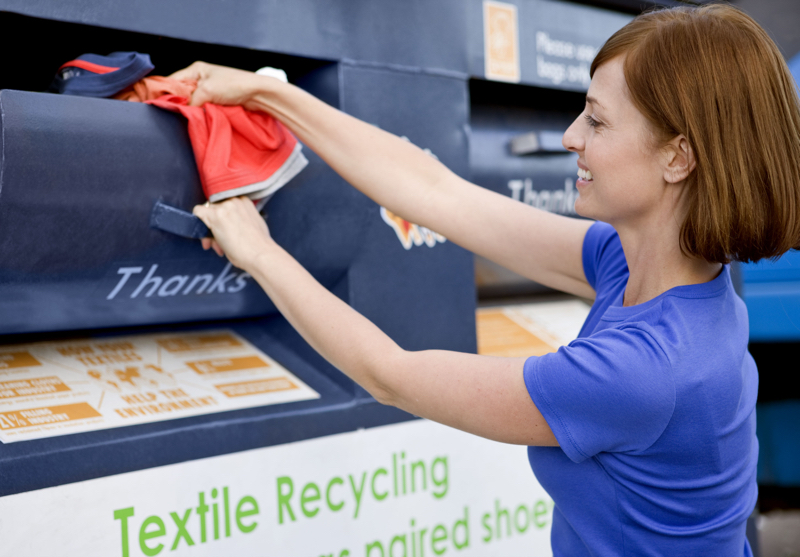
We’ve all heard the estimate that approximately 85% of clothing eventually ends up in landfills — the equivalent of about one garbage truck per second.1 In addition, today’s consumers are purchasing more clothing than ever before. At current rates, and with projected population growth, resource consumption is forecasted to triple by 2050.2 This is not sustainable.
So, what do we do about it? We posed this and other questions to our experts and their feedback was clear: truly sustainable innovation in the apparel industry requires holistic, end-to-end approaches. Jahwanna Berglund, Fashion Editor at Odlaisque Magazine said, “True innovation is not only about working on more environmentally-friendly materials, but also prioritizing quality before quantity to ensure the whole cycle from production to consumer has less of an environmental impact.”
Changing Consumer Behavior
The experts agree that changing consumer behavior is difficult, but some suggest brands and retailers can lead on sustainability education and offer more sustainable fashion.
“Retailers’ efforts will help change behavior not only about packaging, but apparel and other consumables, and the effect those ‘throw away’ items have on our planet,” said Amy Casella, Senior Product Designer. “When you make recycling and reusing products easier, people are more apt to do it.”
“Mostly, innovations address new materials, but there is little true progress towards slowing down the pace of fashion,” explained Meri Lundahl, Chief Sustainability Officer at Teraloop Oy. “High-quality, durable, and sustainable materials remain something that a certain group of consumers appreciate, but a large bulk of consumers still buy fast fashion. This needs to be addressed to achieve true sustainability—or new innovations are needed to make fast fashion sustainable.”
Sustainability Survey Results
We asked the panelists what they thought would make a bigger impact on sustainability in the industry, accept lower profits now to absorb the cost of sustainable materials, or start investing now to develop new materials, better processes and innovative solutions. Investing now received 75% of the votes.
In addition to our panelists, we also surveyed a group of leading brands and retailers. We asked how impactful they believed recycled fibers will be in reducing the industry’s carbon footprint. Over 25% said it could be somewhat impactful, 36.7% said recycled fiber would make a meaningful impact, and 36.7% said it would be highly impactful.
When asked whether using recycled materials from within or outside the industry would be more impactful, 40% voted for waste from the apparel industry, and 26.7% voted for waste from outside the industry. It makes no difference earned 16.7% of the vote, while 16.7% said they were not sure.
Visit Keep in the loop with LYCRA to learn about our sustainability efforts and discover COOLMAX® and THERMOLITE® EcoMade fibers made from 100% textile waste.
thelycracompany.com/loop
Sources: 1 McKinsey and Company, 2017. 2 OECD: Fisher-Kowalski, 2017.
LYCRA®, COOLMAX® and THERMOLITE® are trademarks of The LYCRA Company.