How sustainable color technology keeps garments looking new, wash after wash
Color fade is a hidden sustainability crisis. When garments lose their vibrancy after just a few wears or washes, consumers discard them prematurely. This undermines the fashion industry’s sustainability goals and negates brand investments in sustainable materials and production.
The traditional assumption has been that brands must choose: eco-friendly dyes with poor colorfastness or conventional chemistry that delivers durability. This false choice has left many brands struggling to balance sustainability and quality. The stakes are high. Faded colors lead to customer complaints and increased returns, damaging reputations and creating significant financial and logistical burdens.
“The sustainability-performance tradeoff is over,” says Dhirendra Gautam, Vice President, Commercial at Archroma. “Today’s technologies enable brands and mills to advance their environmental commitments while producing garments that keep their vibrant colors through 50 washes and beyond.”
A new standard for color performance
Archroma has long led the way in sustainable color innovation. The company introduced the industry’s first HIGH IQ® lastingcolor program, setting a benchmark for color durability with garments retaining vibrancy for up to 20 washes at that time.
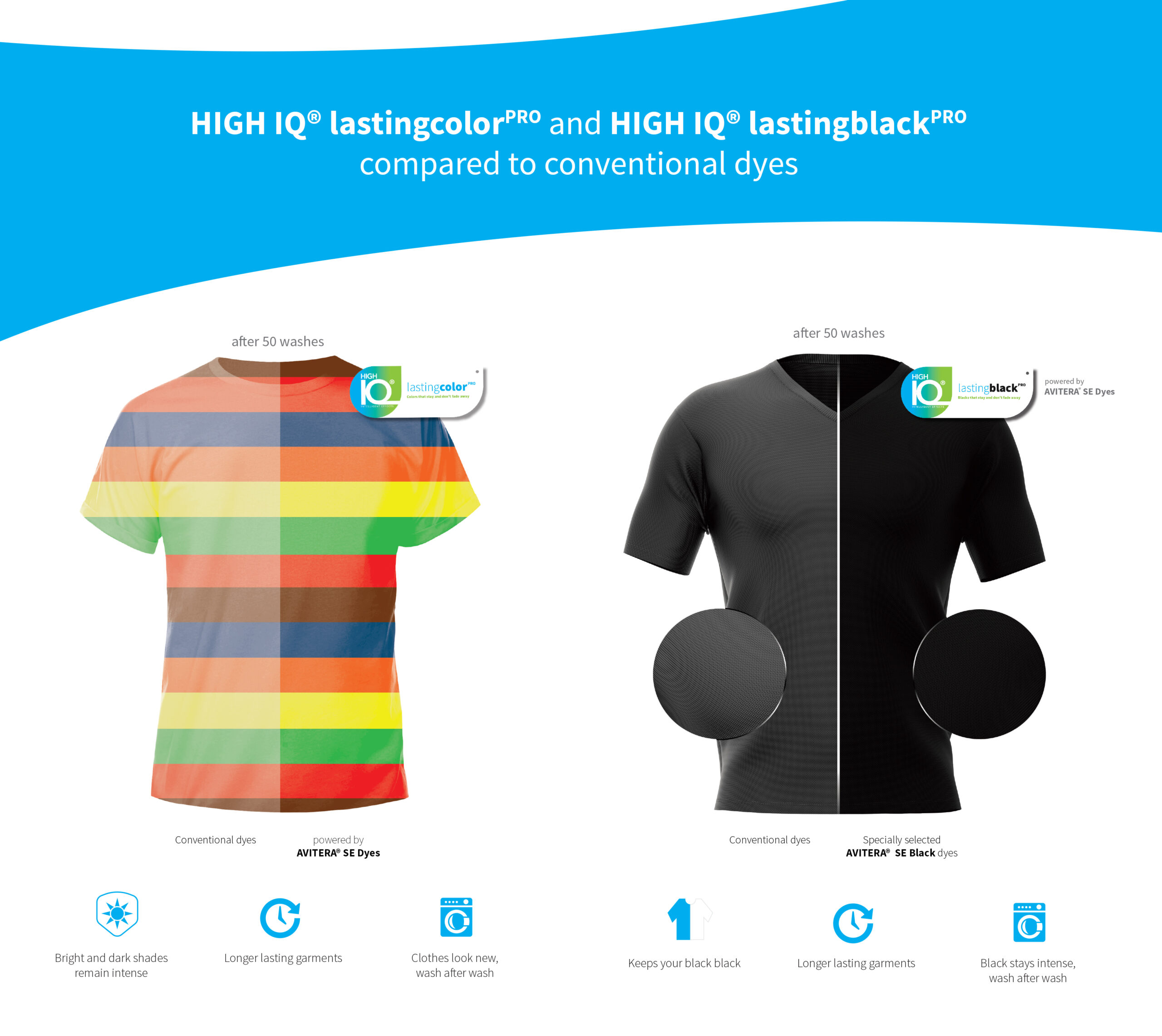
Now, as demand for longevity grows, Archroma raises the bar with HIGH IQ® lastingcolorPRO, the first and only program designed to keep garments looking new for up to 50 washes, while maintaining exceptional sustainability performance.
Powered by AVITERA® SE – revolutionary polyreactive dyes that form strong bonds with textile fibers, the HIGH IQ® performance assurance program delivers unmatched wash durability while being bluesign® APPROVED, ZDHC Gateway Level 3 compliant, and C2C Certified® Material Health Gold.
The HIGH IQ® program delivers superior color retention while dramatically reducing environmental footprint. With the HIGH IQ® lastingcolorPRO solutions, mills can use up to 50% less water and energy in processing compared to conventional dyeing methods, reduce CO2 emissions by up to 50% and produce fabrics free from harmful substances, like p-chloroaniline (pca).
The results are striking. Both HIGH IQ® lastingcolorPRO for vibrant shades and lastingblackPRO for deep blacks demonstrate minimal fade even after 50 laundry cycles, meeting EU and US home laundering programs.
“With the HIGH IQ® lastingcolorPRO series, we’ve solved the color degradation problem that has plagued the industry,” Anish Paliwal, Market Segment Director, Process Chemicals and Coloration at Archroma. “Mills can now add value with vibrant long-lasting color without scarifying eco-friendly production at commercial scale or negatively impacting their plant productivity and profitability.”
Real-world impact
For functional fabric applications where color durability is essential, HIGH IQ® lastingcolorPRO delivers measurable advantages:
- Activewear must maintain aesthetic appeal through intensive washing cycles
- High-visibility workwear requires both safety compliance and long-term durability
- Everyday wear benefits from extended garment life and reduced returns
“Garments that stay looking new, wash after wash, are a sign of quality that consumers expect from eco-friendly brands today,” Bernhard Knoche, Global Brand Engagement Director of Archroma explains. “The HIGH IQ® hangtag gives brands a powerful way to communicate their quality commitment at point-of-sale and win consumer trust.”
Only fabrics that pass rigorous and multiple home laundering fastness and sustainability testing can earn HIGH IQ® certification. Beyond color retention, the program offers customizable formulations for specific end-use and performance needs, including advanced protection and comfort.
Mills and brands seeking both lasting color performance and environmental benefits can learn more about HIGH IQ® at https://www.archroma.com/textile-effects/tools/high-iq