Regulation can lift barriers to fashion circularity

Share
Share

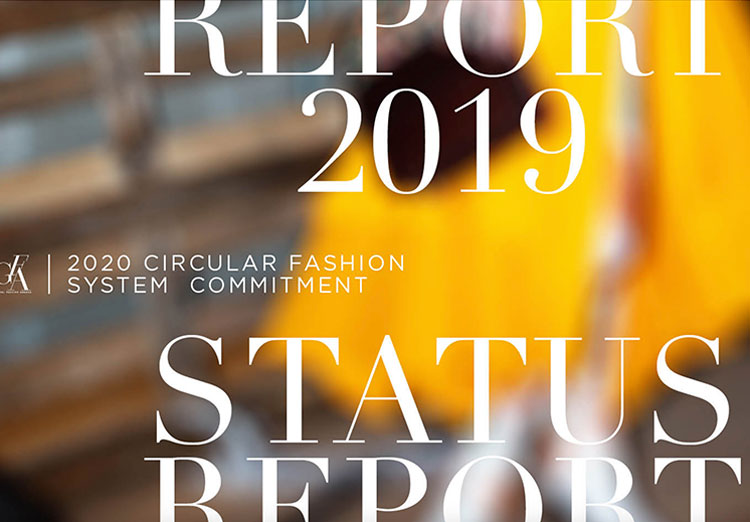
COPENHAGEN – Fashion brands need to speed up moves towards circularity according to a new report published today by Global Fashion Agenda, which shows only modest progress towards a set of ambitious targets by 90 brands and retailers who signed up to its 2020 Circular Fashion System Commitment in 2017.

Today’s two year status report reveals that just 21 per cent of the original 213 targets, from four key ‘action points’, have so far been met by brands such as Nike, H&M, ASOS, Gap Inc., PVH, Kering and VF Corporation.

Yet GFA still remains hopeful of further progress. Speaking to Ecotextile News ahead of the report’s launch, Jonas Eder Hansen, Public Affairs Director, said he was confident that signatories will reach at least 50 per cent of the targets being set by the deadline of 30 June 2020. “Circularity is not a quick fix and requires companies to rethink current models. This takes time and signatories have spent the first period to adjust and are ready to accelerate implementation towards June.”

The news coincides with a meeting in Brussels today between fashion industry stakeholders to discuss the new report and how to establish a circular fashion system. At the roundtable event, GFA will call for governments and policymakers to develop new regulatory frameworks to accelerate the change from current linear business models into new circular ways to make fashion. 

COPENHAGEN – Fashion brands need to speed up moves towards circularity according to a new report published today by Global Fashion Agenda, which shows only modest progress towards a set of ambitious targets by 90 brands and retailers who signed up to its 2020 Circular Fashion System Commitment in 2017.

Today’s two year status report reveals that just 21 per cent of the original 213 targets, from four key ‘action points’, have so far been met by brands such as Nike, H&M, ASOS, Gap Inc., PVH, Kering and VF Corporation.

Yet GFA still remains hopeful of further progress. Speaking to Ecotextile News ahead of the report’s launch, Jonas Eder Hansen, Public Affairs Director, said he was confident that signatories will reach at least 50 per cent of the targets being set by the deadline of 30 June 2020. “Circularity is not a quick fix and requires companies to rethink current models. This takes time and signatories have spent the first period to adjust and are ready to accelerate implementation towards June.”

The news coincides with a meeting in Brussels today between fashion industry stakeholders to discuss the new report and how to establish a circular fashion system. At the roundtable event, GFA will call for governments and policymakers to develop new regulatory frameworks to accelerate the change from current linear business models into new circular ways to make fashion. 

Share

Recommended

Latest Magazine

Features
Why the EU’s regulatory push for longer-lasting clothes could enrich the wrong industry.
Textile dye recovery is technically real, but experts warn that it risks becoming a costly sideshow.
When profits wobble, fashion brands default on climate, pushing self-issued net-zero targets over the horizon.
News
A new evidence-based review challenges assumptions over organic cotton’s growth.
EU anti-fraud investigators help block the illegal export and dumping of thousands of tonnes of textiles.
SBTi’s new net-zero standard tightens rules on fashion’s climate claims
Opinion
Exclusive: Uzbek cotton cluster boss hails big reforms as human rights campaigners claim exploitation

Other publications from MCL News & Media

Scroll to Top
Logo

Our free newsletter showcases the very best of our journalism, delivered to you twice a week

Advertising
With Us

Help to support the purpose-led work of our team of journalists, international correspondents, and partners – and expose your product or service to our global readership.

Subscribe to our magazine today and receive exclusive online content

Subscribe